SOURCE-BACKED CASE STUDY
Global instruments monitoring Project
Project context
Global instruments monitoring Project
Challenge
We were tasked with a comprehensive overhaul of an advanced telemetry and cloud-based remote device monitoring and control system for a global water technology provider.
Hypothesis Solution
Develop a system tailored for management, enabling them to receive pertinent alerts, streamline the allocation of repair tasks, monitor telemetry data, and extract actionable insights
Current State
Our clients conveyed that the current remote water management system faced challenges with low user satisfaction and inefficient task execution. Consequently, we initiated efforts to comprehend the underlying issues with the existing system.
User & Stakeholder Interviews
We conducted in-depth interviews with 11 stakeholders and 6 users. Following this, we transcribed and coded the interviews, subsequently clustering the key points to derive insights and pain points.
Users are frustrated by redundant, disruptive alarms that are not easily actionable.
Confusing/too many steps to set up alarms
Multiple alarms in the middle of the night that could be consolidated into one
Desire to immediately login and access relevant info (specific pump or customer information) from alarm
The current UI is confusing and not intuitive.
"Not simple enough" - confusing system set up with too many steps
Difficulties remembering how to take specific actions
Desire of support documentation and a simpler set up for customers
Frustration with an interface that is not intuitive
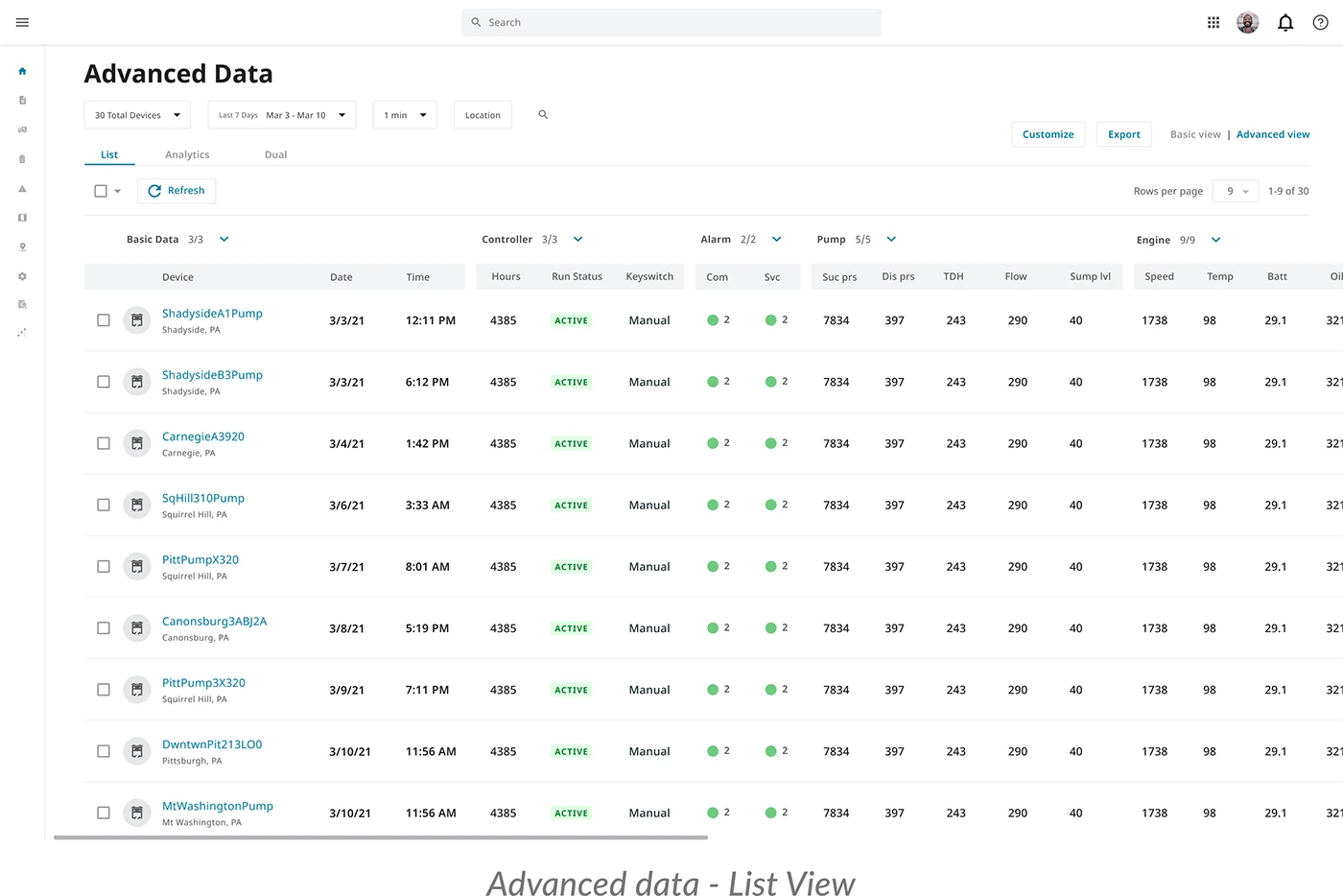
There is a lot of data that is difficult to access and utilize/interpret.
Hard to read data in current table
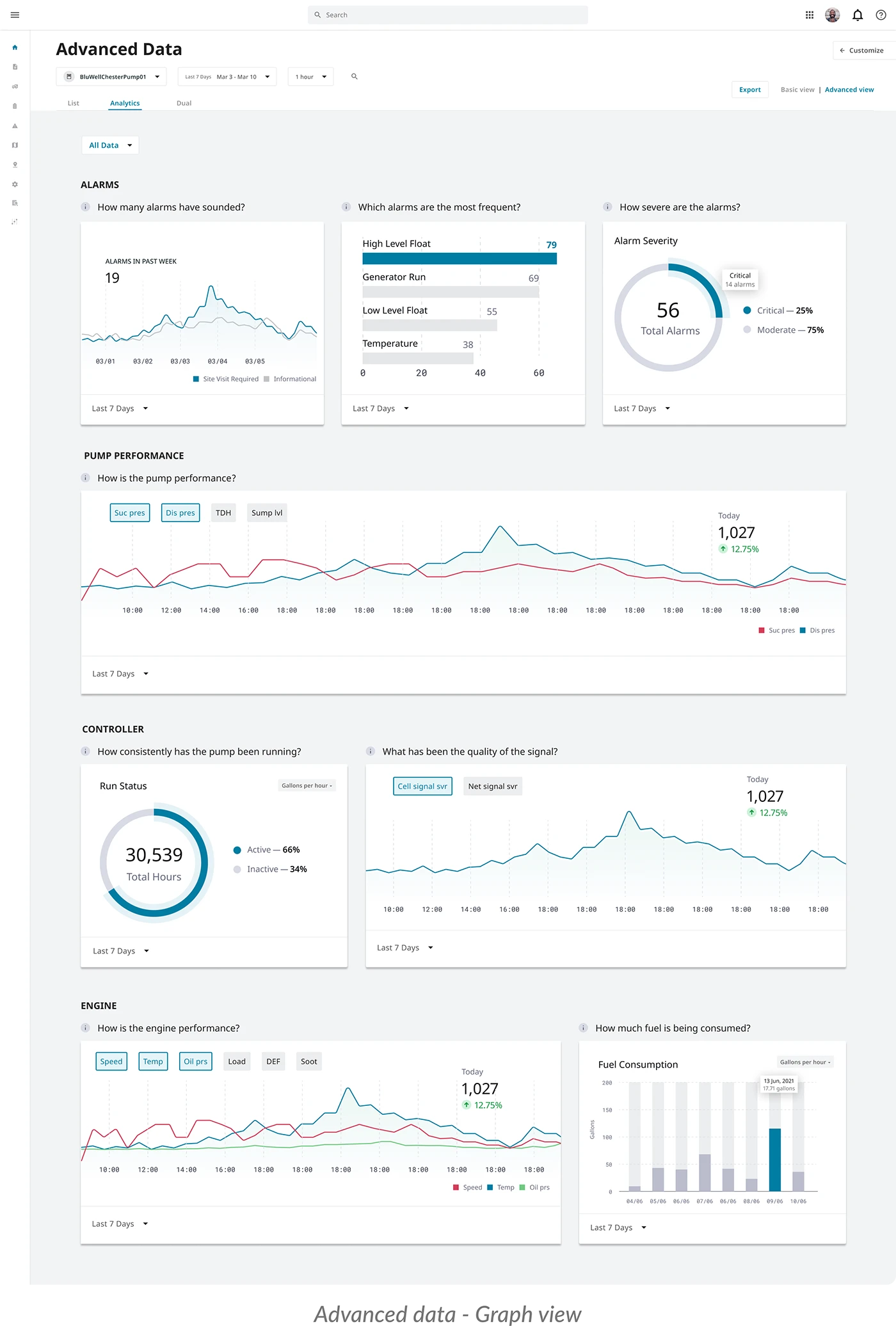
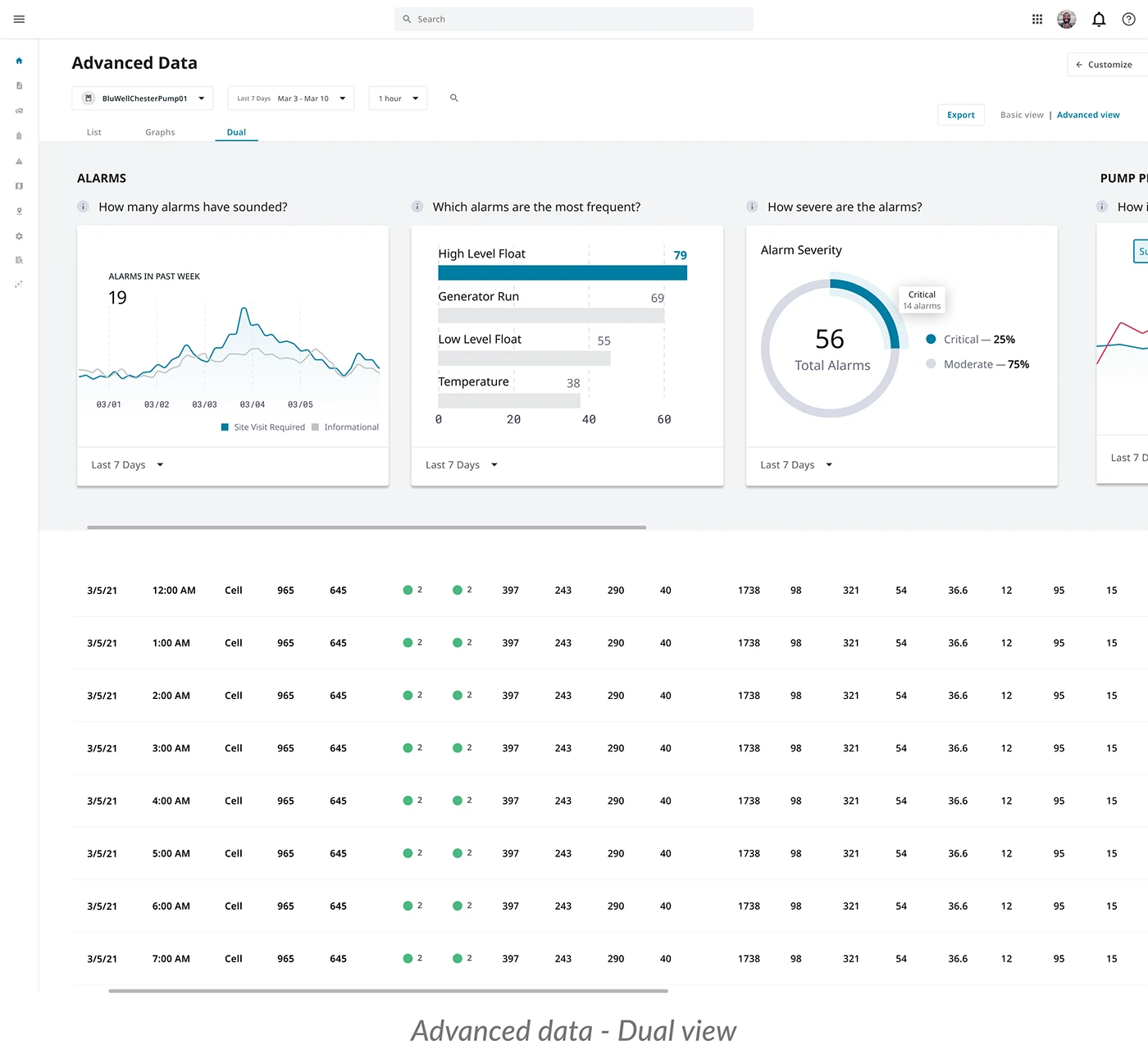
Should be able to compare data and see trends without exporting data
A lot of data to download and interpret
Data and reports are not easily accessible by phone
Remote access allows users/admin to proactively address pump issues.
Remote access is a differentiating feature from other competitors
Monitoring telemetry and alarms allows for risk mitigation and data-driven decision-making
Defining & Visioning
Through several workshops with the client, we were able to define the customer, map the customer journey, rank and prioritize products, pains, and gains; and co-create the product vision statement.
The final product vision statement is as follows
We believe that optimizing your pump fleet should be stress-free and our full-service solution proactively helps you perform better. Tomorrow’s challenges shape our 24/7 platform for monitoring and service. Together, we work smarter and reduce the impact of critical water challenges in water utilities.
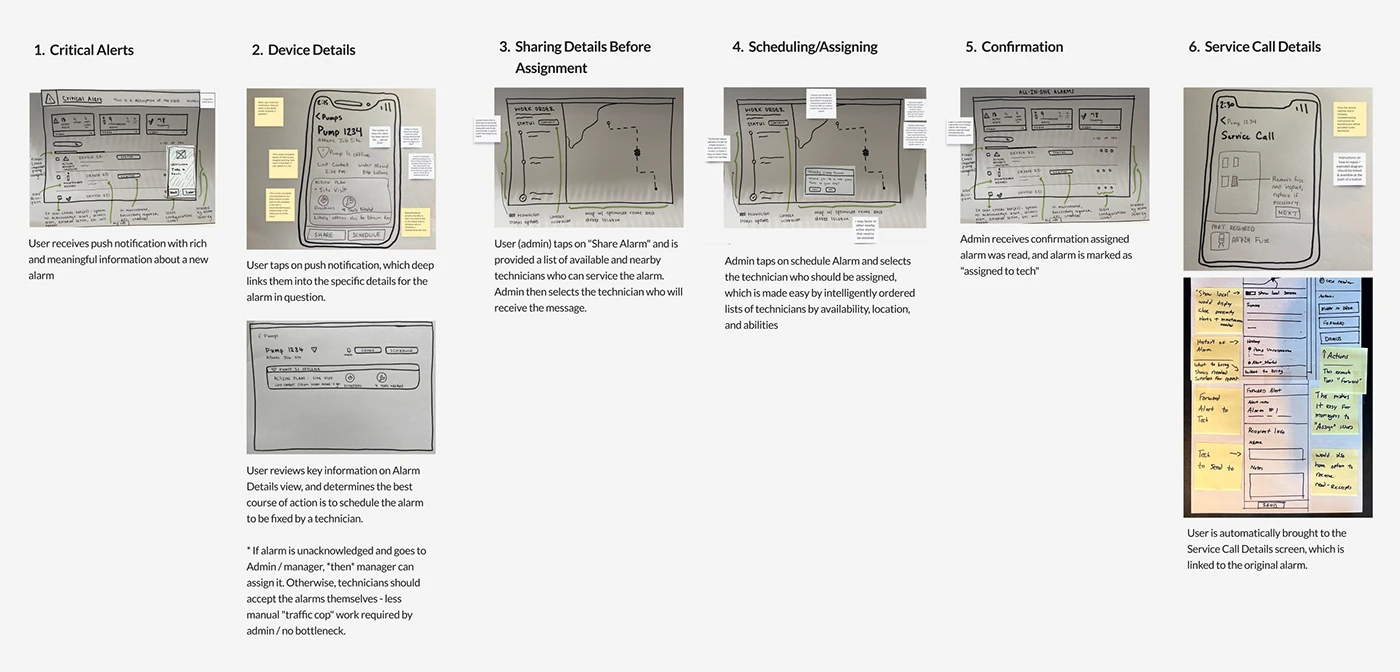
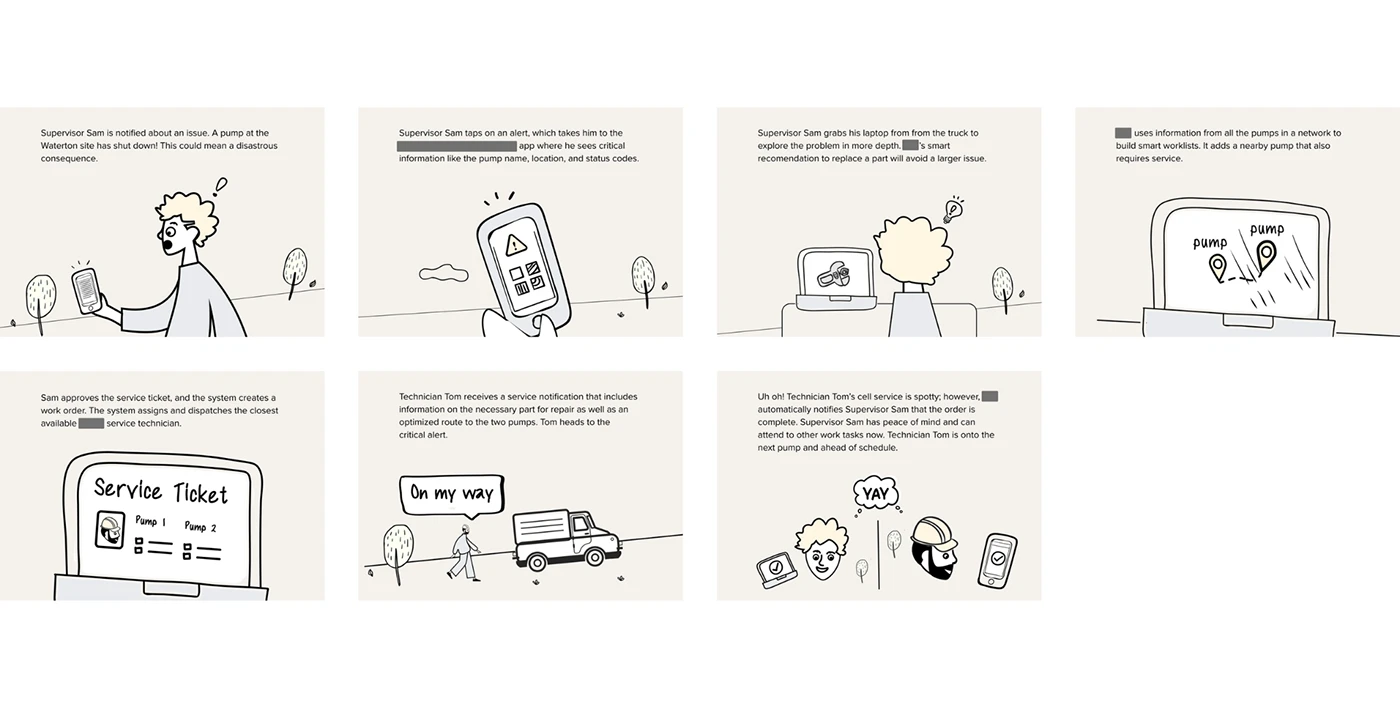
Storyboard
Personas
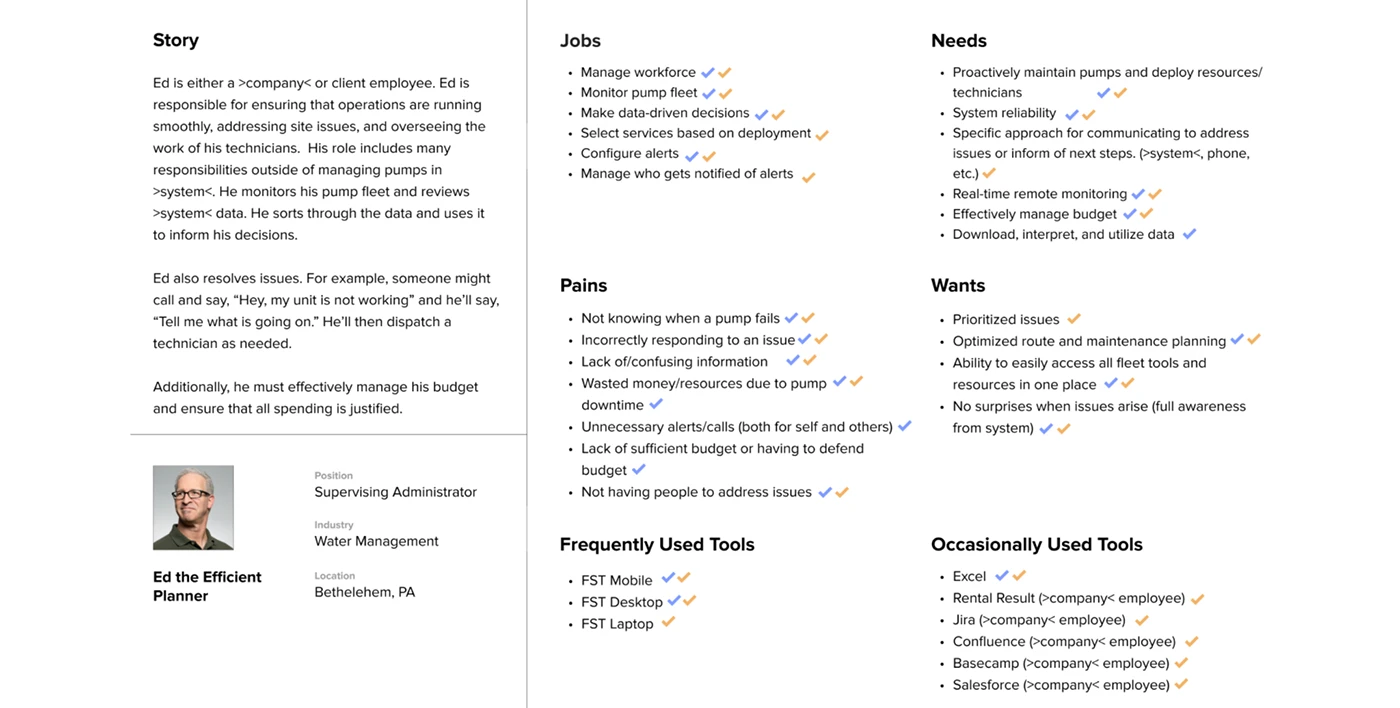
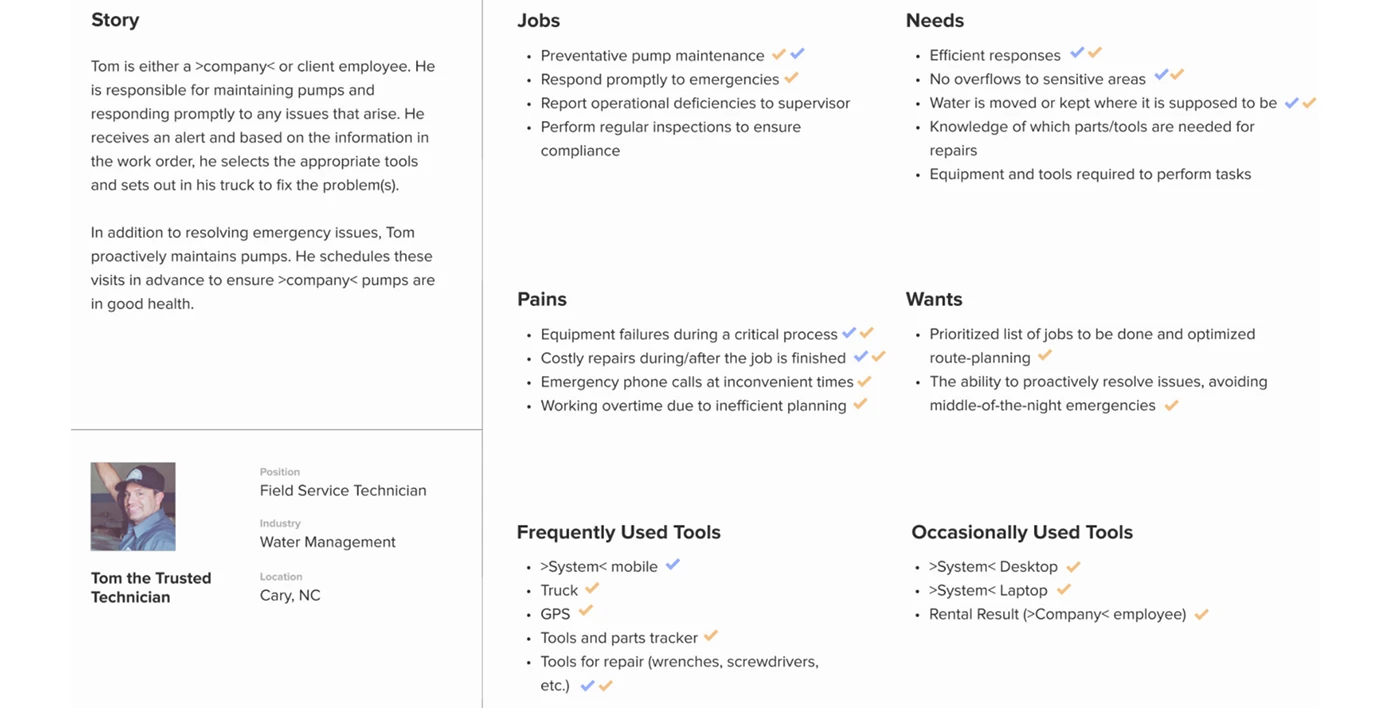
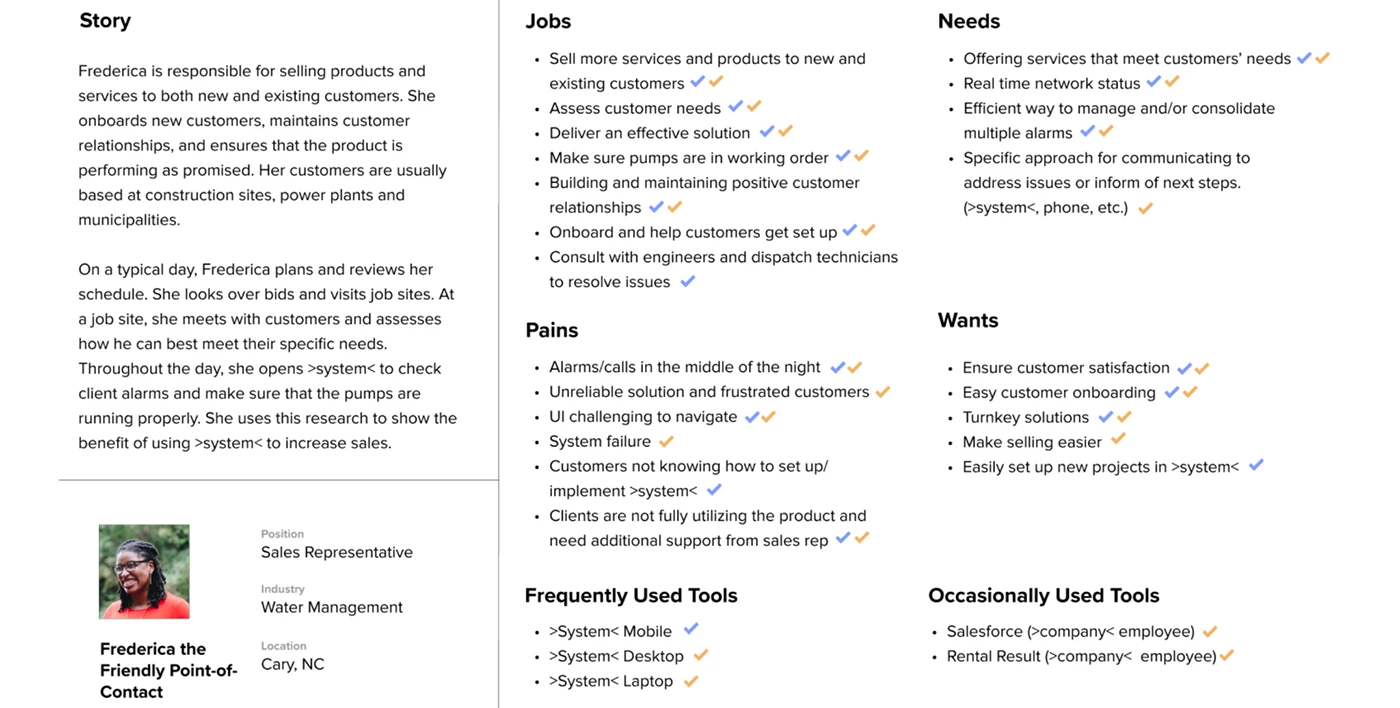
Following the prioritization of user needs, we developed personas for the key stakeholders within the company product ecosystem.
Product Roadmap
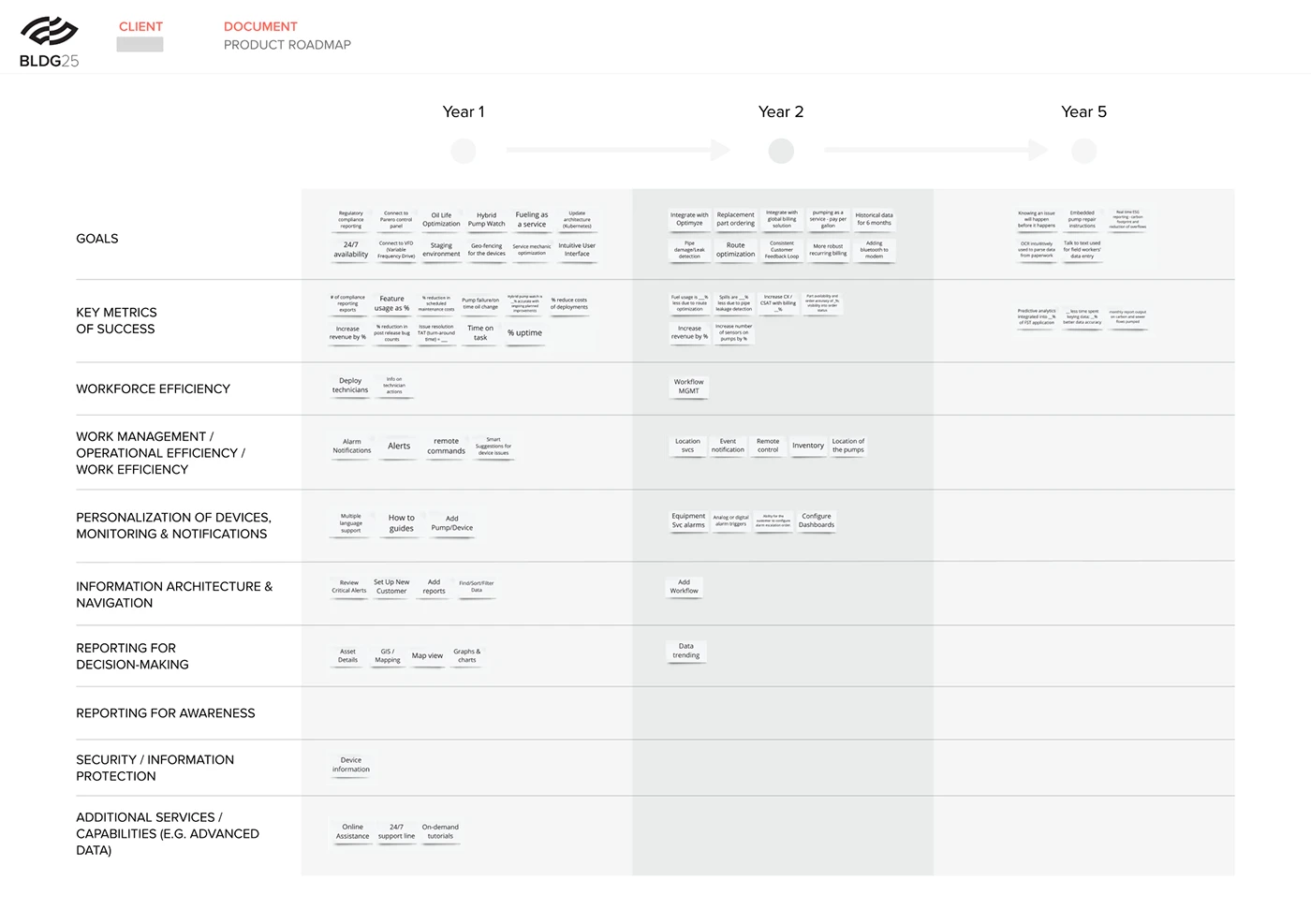
We crafted a product roadmap to carefully align our solution with the organization's long-term business objectives.
Ideation towards pain points
How Might We's?
How might we improve the UI navigation for users to swiftly identify pump issues and take necessary actions within just a few clicks?
How might we improve existing users' understanding and adoption of new functionalities in the system?
How might we reduce information overload without compromising essential data?
After brainstorming and sketching out individual ideas, engaged in a collaborative discussion and ranked our concepts. From this evaluation, we selected the most viable ideas to develop a solution storyboard.
Information Architecture
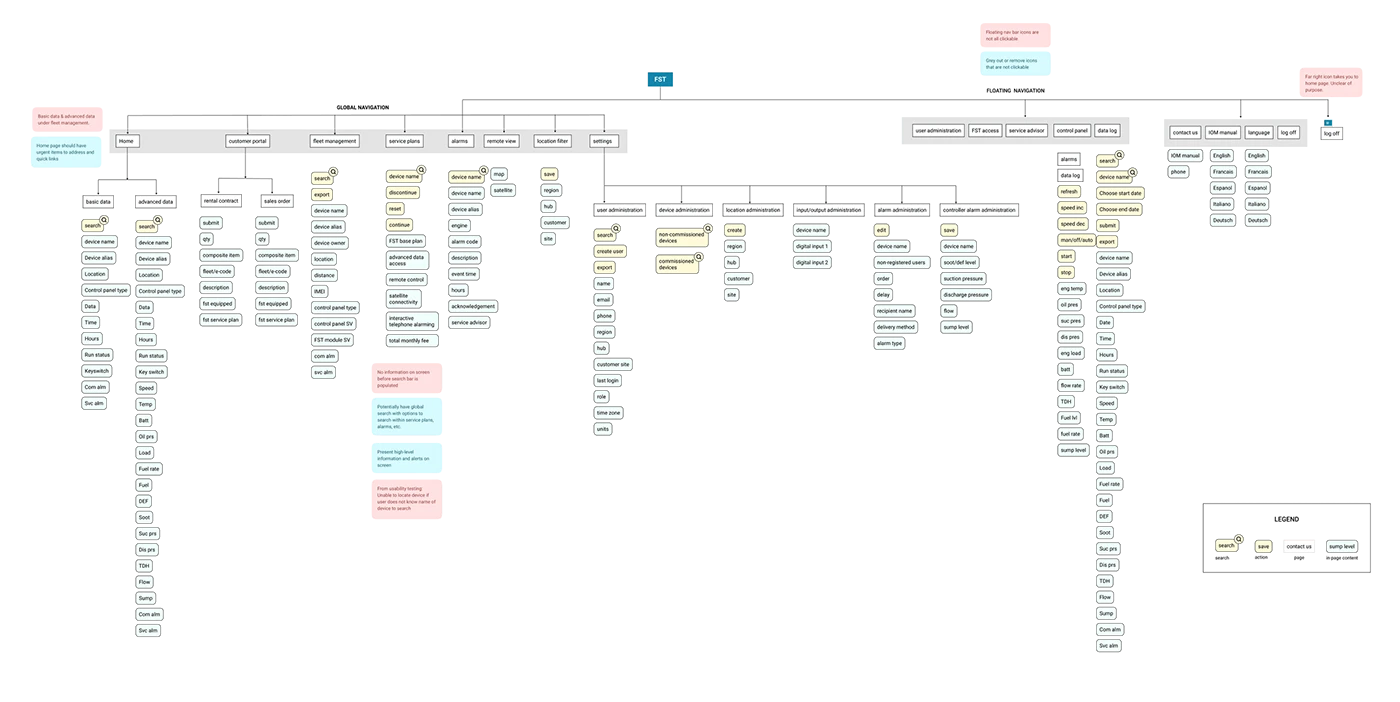
Current Sitemap
We examined the existing system to develop a sitemap and identified significant errors within the process.
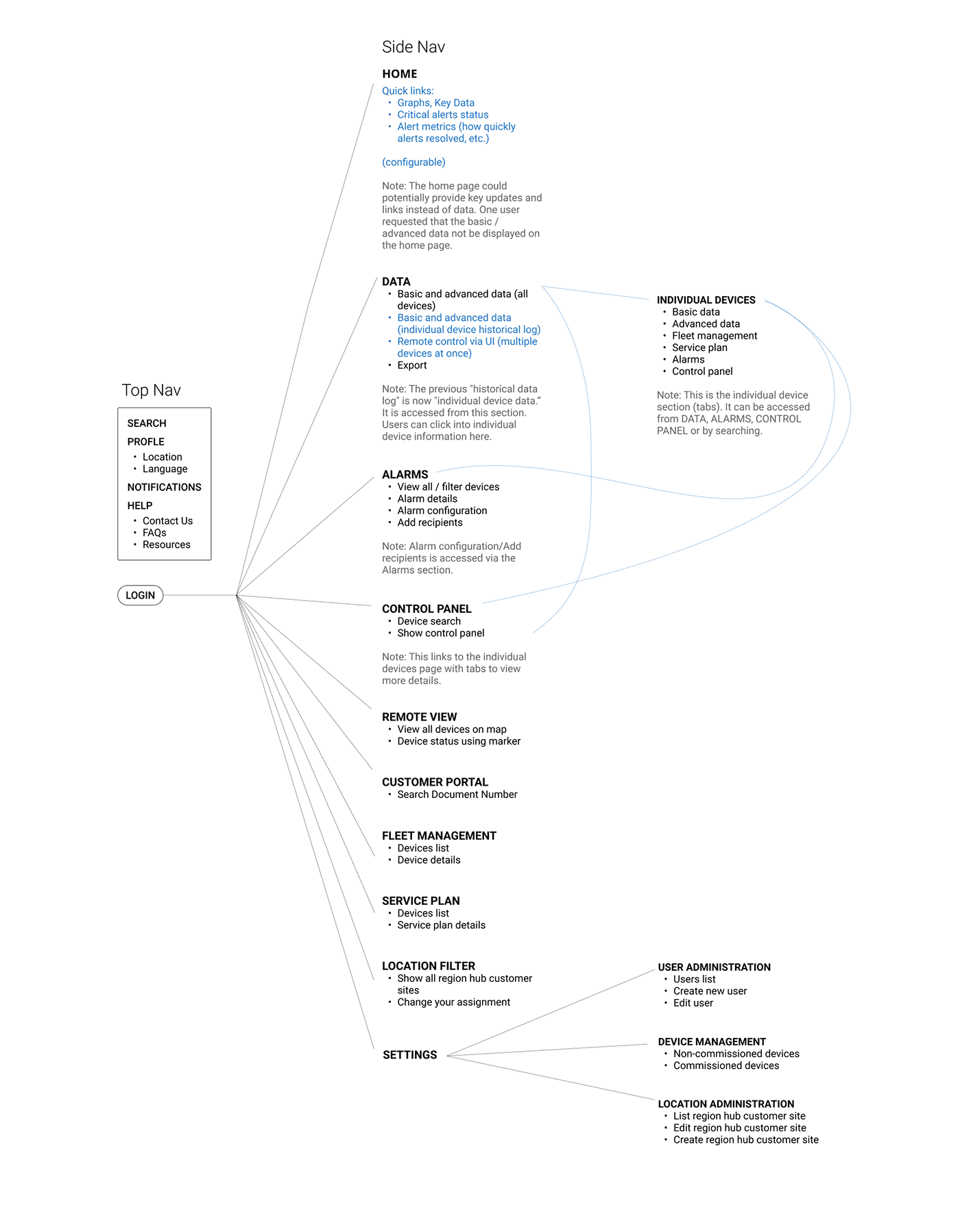
New Sitemap
We then created a sitemap for our new system, aiming to streamline and simplify the presentation of information
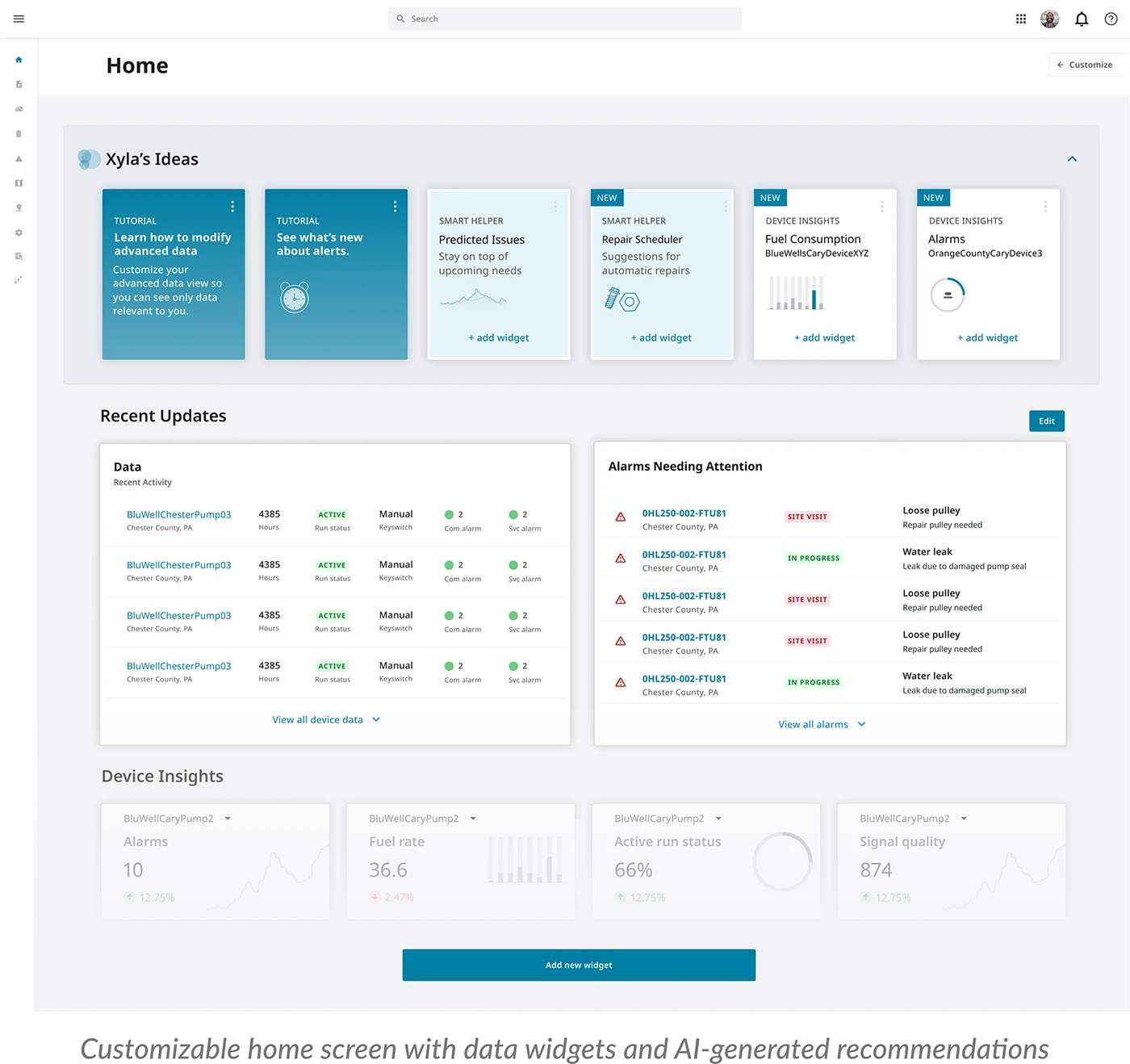
User Interface
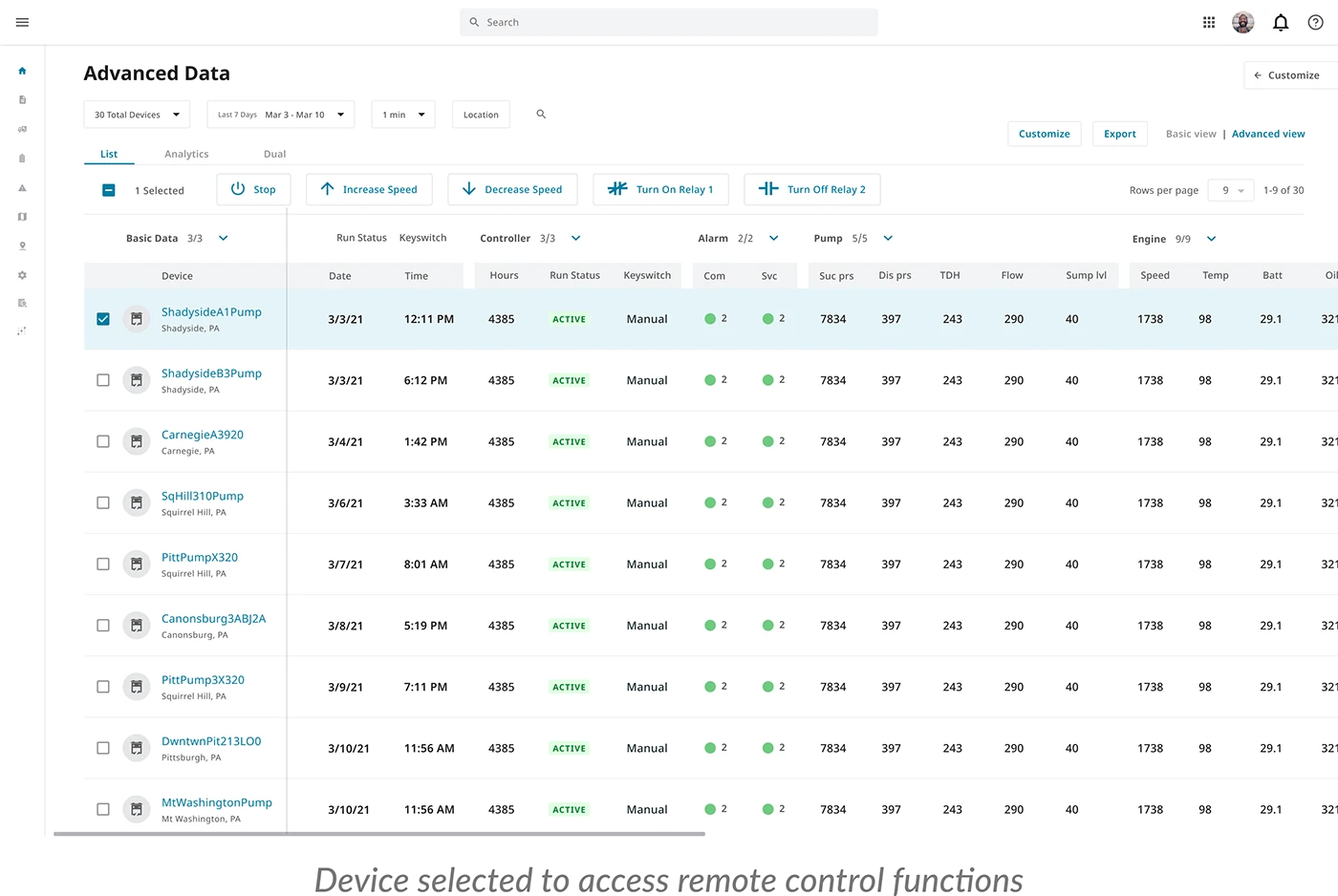
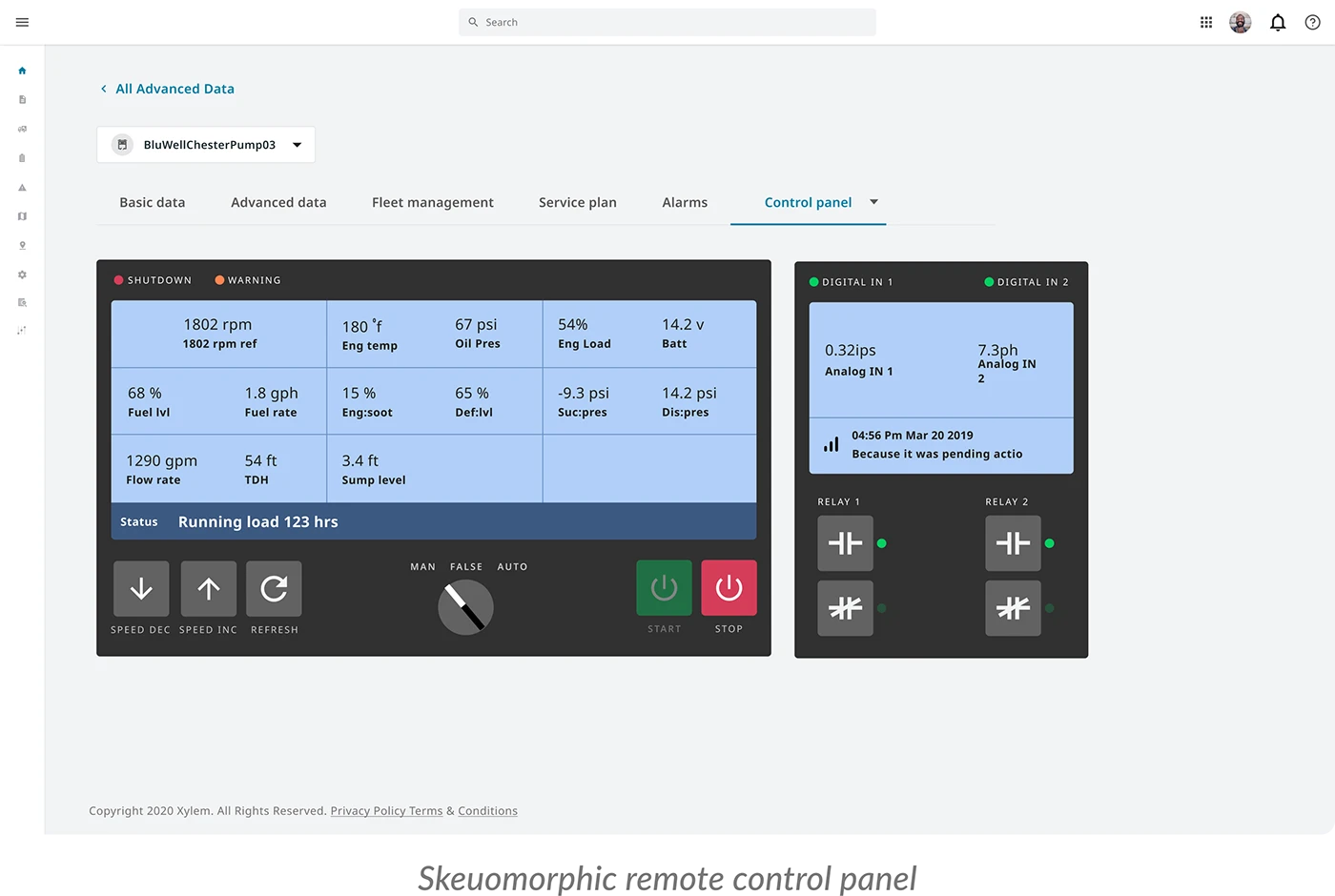
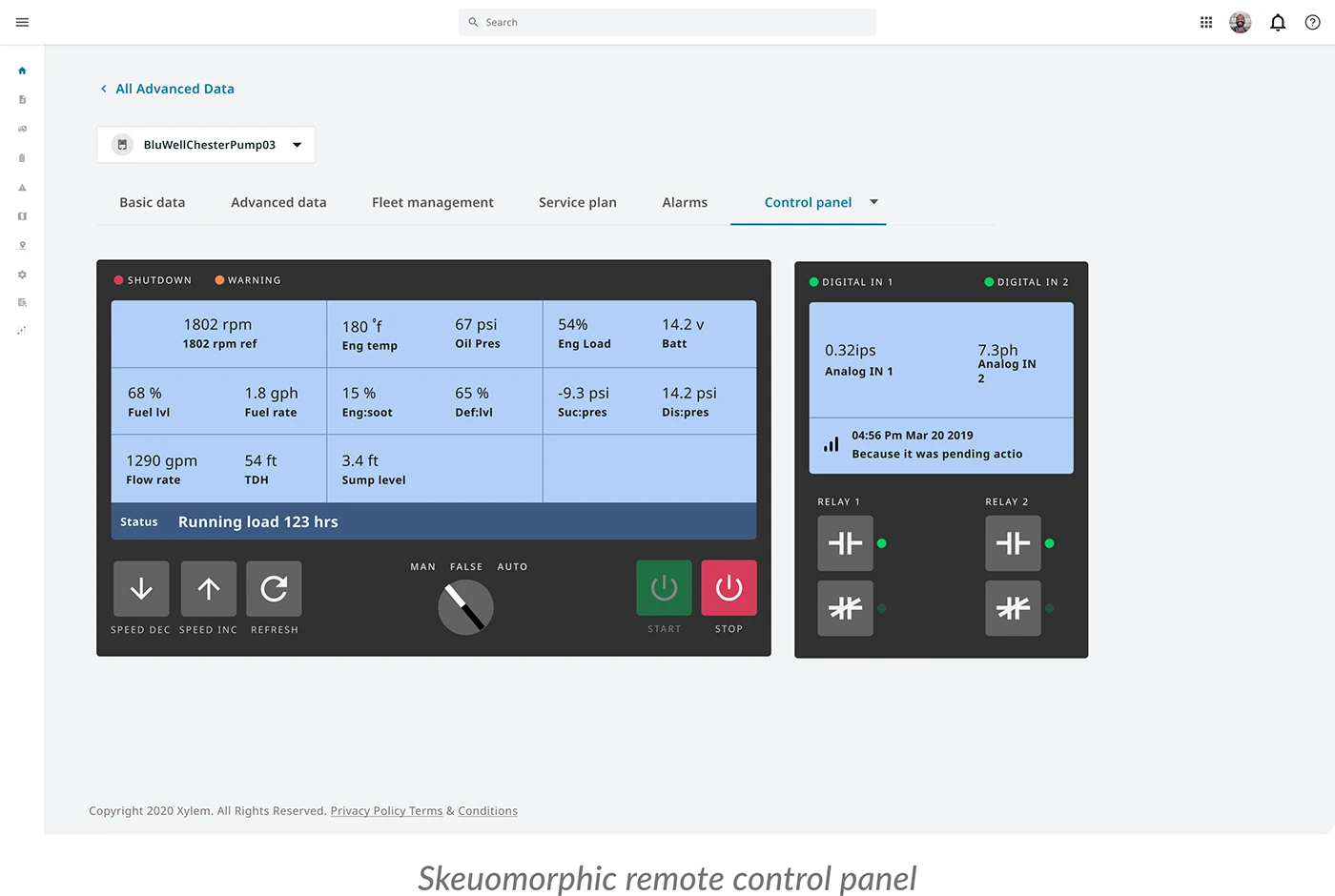
Remote Control via UI
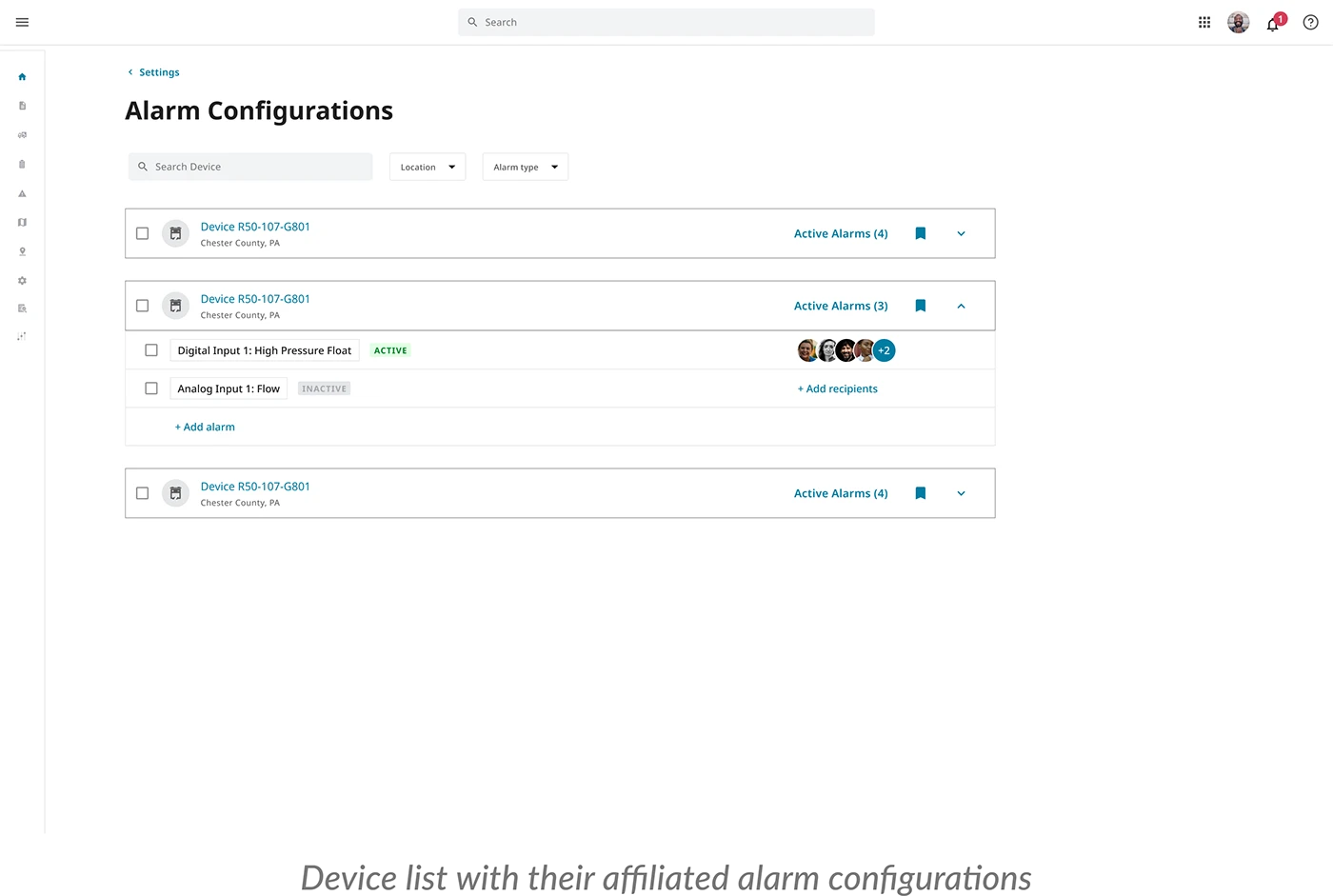
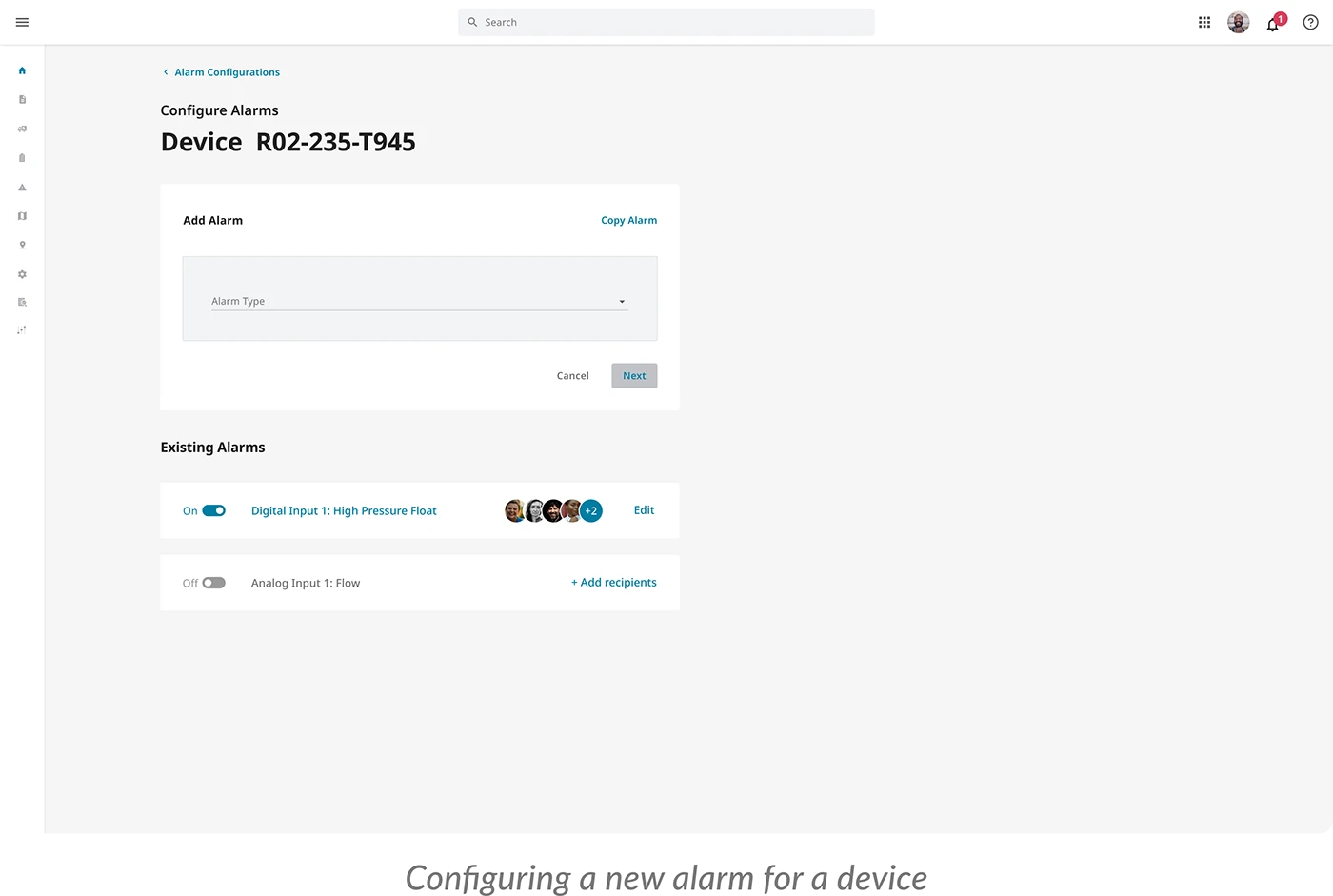
Alarm Configuration
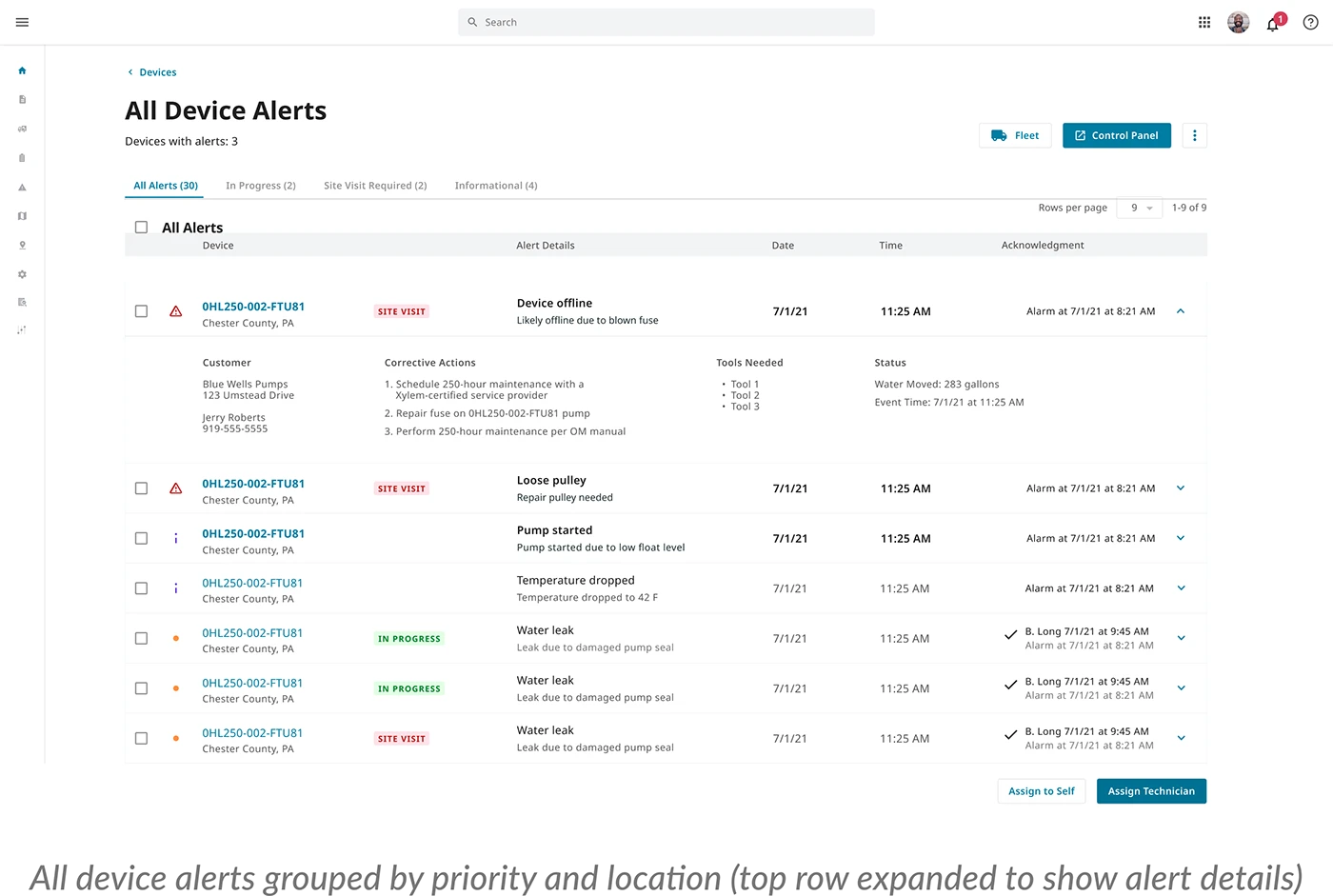
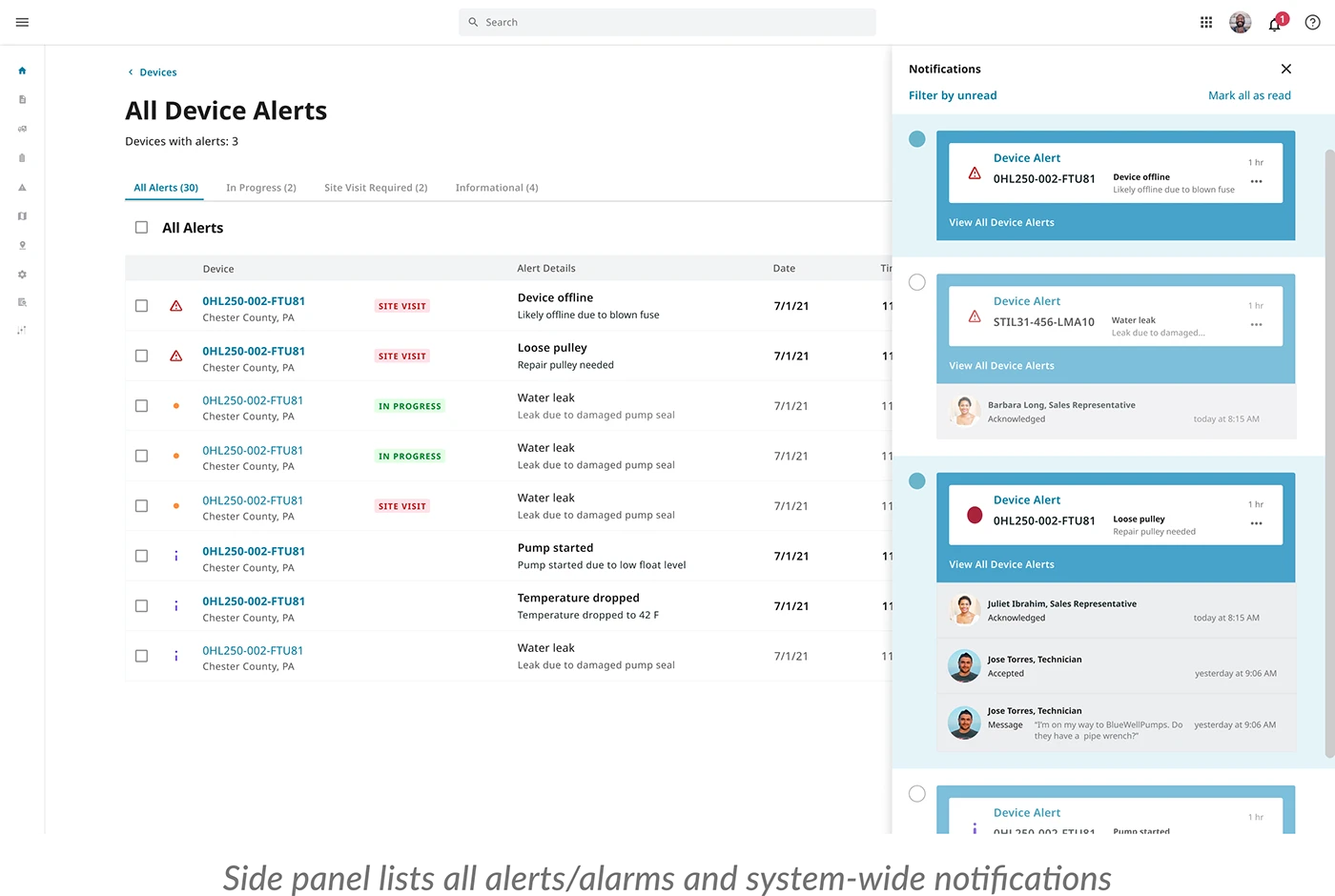
Device Alerts
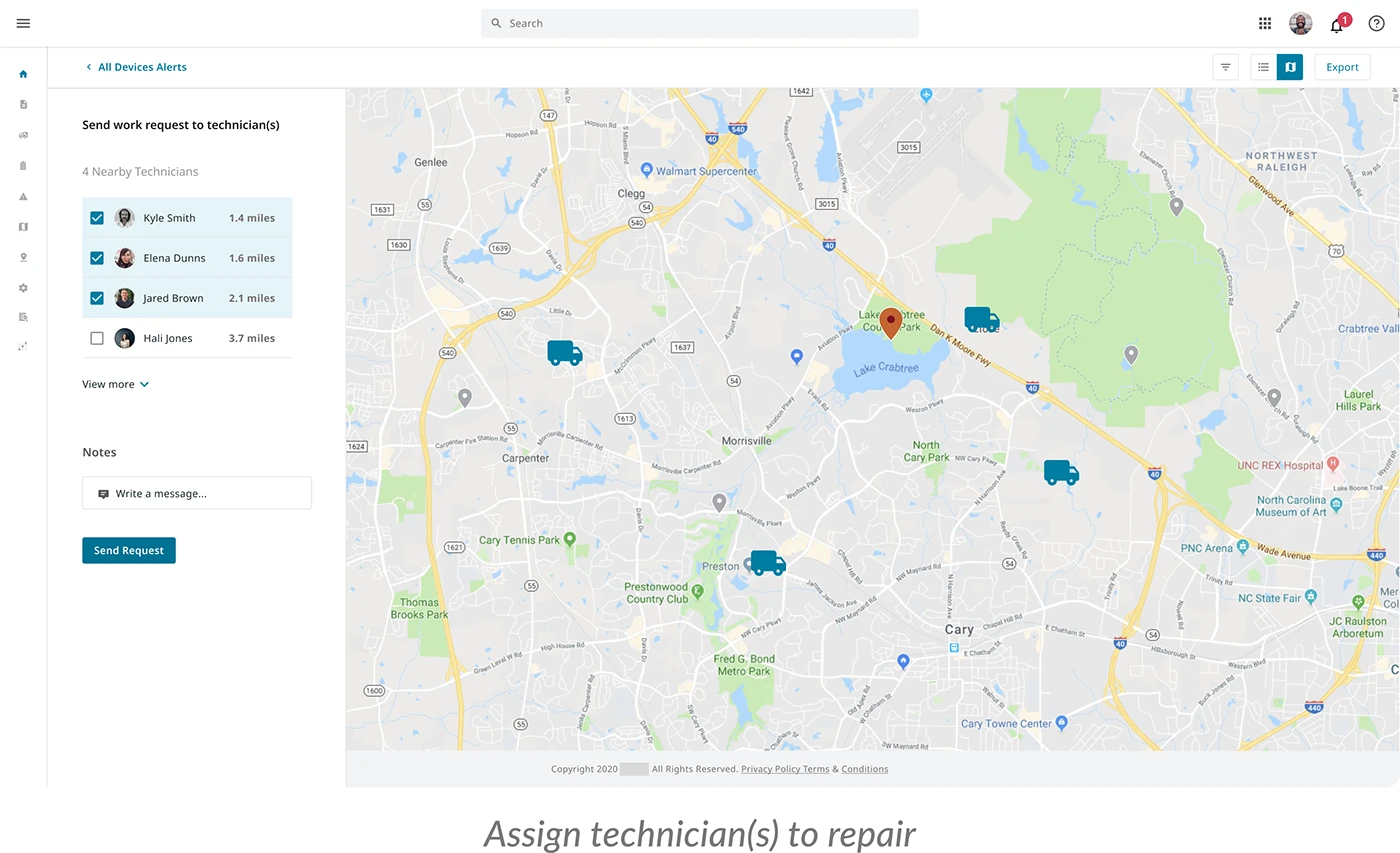
Pump Repairs
PROJECT ARTIFACTS
The screens and process, brought into the case.